Frog Coloring Book for Kids: A Digital Asset for Creative Projects
As a designer and publisher, I am constantly searching for assets that offer both immediate utility and long-term value. The Frog Coloring Book for Kids is one such asset. At its core, it is a collection of high-quality, print-ready illustrations, but its potential extends far beyond the pages of a simple coloring book. This bundle is a versatile toolkit for anyone in the creative or publishing space, from KDP entrepreneurs to educators and crafters. It provides the foundational elements to build engaging, profitable products without starting from a blank canvas.
Understanding the Visual Style and Appeal
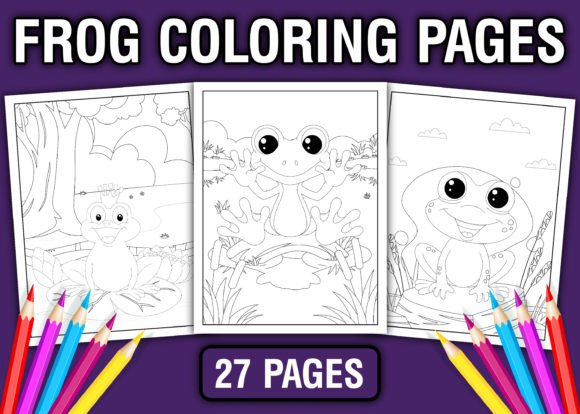
The illustrations within the Frog Coloring Book for Kids are characterized by their clean, bold outlines and charming, friendly character designs. The style strikes a perfect balance: it's simple enough for young children to color within the lines, yet detailed enough to keep older kids and even adults engaged. You will find a variety of frog personalities—from whimsical, smiling frogs on lily pads to more detailed scenes featuring frogs in their natural habitats. This visual variety is crucial. It allows for the creation of thematic sections within a single book or the development of multiple, distinct products from one source file.
The overall appeal lies in its versatility. The designs are not overly childish or cartoonish in a way that limits their audience. They possess a classic storybook quality, making them suitable for a wide range of applications. Think of these pages not just as coloring templates, but as foundational graphic elements. They can be isolated, scaled, and combined to create patterns, borders, spot illustrations, and more. The provided AI and EPS files are particularly valuable here, as they are vector-based. This means the artwork can be resized to any dimension—from a small sticker to a large poster—without any loss of quality, a key feature for any serious design asset.
Practical Applications Beyond the Coloring Book
The primary use case, of course, is creating a high-content book for Amazon's Kindle Direct Publishing (KDP) platform. The bundle is specifically optimized for this, with all files sized at 8.5" x 11" and delivered in print-ready formats. You can easily compile the 27 pages into a single interior, or mix and match to create multiple themed volumes. This is where the real business potential lies. Instead of one book, you can develop a series—perhaps "Frogs of the Pond," "Tropical Tree Frogs," and "Funny Frog Adventures"—each with a unique interior crafted from the same bundle. This approach builds a recognizable brand on the KDP marketplace.
However, the applications extend well into other areas of creative business. For content creators and marketers, these illustrations are perfect for developing engaging social media graphics. Imagine a series of Instagram posts where followers can vote on color schemes for a featured frog, or printable activity sheets offered as a free download to grow an email list. Bloggers in the parenting, education, or crafts niche can use the pages to create downloadable resources for their audience, adding tangible value to their content.
For those in the physical product space, the vector files open up a world of possibilities in packaging design and merchandise. The frog artwork could adorn the packaging for a children's product, be printed on tote bags, or become the centerpiece of a party decoration kit. Small business owners can use the designs to create unique stationery, greeting cards, or even fabric patterns for a small-batch craft line. The commercial license included with such digital bundles is a critical component, allowing you to monetize your creations confidently.
Guidance for Implementation and Project Fit
When integrating this asset into your workflow, a methodical approach yields the best results. First, evaluate the project fit. Is your goal a straightforward coloring book, or are you building a more complex brand identity around a frog theme? For a KDP interior, the process is streamlined: select your pages, arrange them in a layout program like Adobe InDesign or even Canva, and export as a PDF for upload. For more advanced projects, like creating a logo or a set of icons, you will want to work with the vector files in Adobe Illustrator, where you can edit paths, change colors, and deconstruct the illustrations.
Next, consider readability and hierarchy if you are incorporating these illustrations into a designed document, such as a workbook or an editorial layout. The bold outlines of the frogs make them excellent focal points. Pair them with a clean, sans-serif font for body text to ensure maximum legibility. The playful nature of the illustrations might also pair well with a handwritten font for titles or headings, creating a cohesive and whimsical brand identity for your project. The key is to test different font pairings to see what resonates with your specific audience.
Finally, always review the full contents of the download. The Frog Coloring Book for Kids bundle provides 27 pages, which is a substantial library. Take the time to catalog the different styles and scenes available. This foresight allows you to plan a content calendar or a product line effectively. By leveraging the full range of provided files—PDF for print, PNG for digital use, and AI/EPS for editing—you ensure that you are getting the maximum return on your investment, transforming a simple coloring book into a cornerstone of your creative business.